Eat Singapore
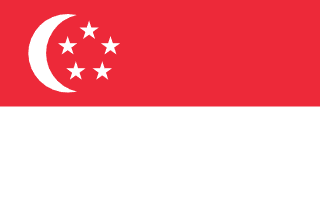
History of Singapore
Singapore's recorded history stretches back centuries, with early mentions in Chinese chronicles as a small trading post known as Temasek, meaning "sea town." It was a stopover for Chinese fleets and a part of the Srivijaya empire. However, its modern genesis truly began in 1819 with the arrival of Sir Stamford Raffles, representing the British East India Company. Raffles recognized the strategic importance of Singapore's natural harbor and its location along major trade routes. He negotiated with local Malay rulers to establish a British trading settlement, laying the groundwork for its future growth as a major port and commercial hub.
Under British rule, Singapore flourished as a free port, attracting merchants and laborers from across Asia and Europe. Its population rapidly diversified, with significant Chinese and Indian communities establishing roots. The island endured the Japanese occupation during World War II, a period of immense hardship and a stark reminder of its vulnerability. After the war, Singapore transitioned through a period of self-governance and, in 1963, joined the Federation of Malaysia. However, political and economic differences led to Singapore's separation from Malaysia just two years later, on August 9, 1965, marking its official birth as an independent nation.
Since gaining independence, Singapore has undergone a remarkable transformation, often dubbed a "miracle" economy. Under the leadership of its founding father, Lee Kuan Yew, the nation prioritized economic development, investing heavily in education, infrastructure, and attracting foreign investment. From a developing nation with limited resources, Singapore has evolved into a global financial center, a leader in technology and innovation, and a highly sought-after tourist destination, renowned for its efficiency, cleanliness, and multicultural society. Its history is a testament to strategic vision, pragmatic policies, and the resilience of its people.
General Information
Capital City
Singapore
Capital's Population: 5,900,000
Continents
Asia
Region
Asia
Subregion
South-Eastern Asia
Borders
Area Size
710.0 km²
0.01% of Australia's size
Population
6,110,200
0.22 times Australia's population
Increasing by 0.9%
Density
8605.92 people per sqkm
Australia is 3.58 people per sqkm
Languages
English, Chinese, Malay, Tamil
Average Max and Min
Here are the estimated average maximum and minimum temperatures for Singapore in Celsius: **Summer:** Max: 31°C Min: 25°C **Winter:** Max: 30°C Min: 24°C
Finance and other
Currency and Symbol
SGD (Singapore dollar, $)
Currency vs $100 AUD
$84.35 (SGD)
Time Zones and at 6pm Melb time
Developed/Transitional/Developing
Developed
Communications
Country Code
SG
Internet Symbol
.sg
International Phone Prefix
+6
Other stuff
Part of the Commonwealth
No
Drive on what side?
Left
Political System
The current leader of Singapore is Prime Minister Lawrence Wong, and they use a **parliamentary republic** system, where the Prime Minister is the head of government and leads the cabinet, which is responsible to the Parliament.
Major Religon
Singapore has a diverse religious landscape, and there isn't one single "major" religion in the sense of having a majority that outnumbers all others significantly. Instead, Singapore is characterized by a **plurality** of religions, with a few leading religions having substantial followings. Based on available data, the religions with the largest number of adherents in Singapore are: * **Buddhism:** This is generally considered the largest single religion in Singapore. * **Christianity:** This is also a very significant religion, with various denominations represented. * **Islam:** This religion has a substantial and important community in Singapore. Other religions with notable followings include Hinduism, Taoism, and Sikhism, as well as a growing number of people who identify as having no religion. So, while **Buddhism** is often cited as the largest single religion, it's crucial to understand that Singapore is a multicultural and multi-religious society where no single faith dominates overwhelmingly.
Big Mac Cost
Yes, they have McDonald's in Singapore and the price of a Big Mac is $6.41 AUD.
Famous Person
The most famous sporting personality in Singapore is arguably **Joseph Schooling**. Here's why: * **Olympic Gold Medalist:** He won Singapore's first-ever Olympic gold medal in swimming at the 2016 Rio Olympics, in the 100m butterfly. This is a monumental achievement that captured the nation's attention and pride. * **National Hero Status:** The victory instantly propelled him to national hero status. He's a household name and widely recognized across all demographics. * **Consistent Excellence:** While the Olympic gold is the pinnacle, Schooling has also achieved significant success in other regional and international competitions, further solidifying his reputation. * **Media Presence and Recognition:** He's a frequent subject in Singaporean media, and his endorsements and public appearances are highly visible. While Singapore has other accomplished athletes in various sports (like badminton player Loh Kean Yew, or football legends), Joseph Schooling's Olympic gold medal is an unparalleled achievement that makes him the most recognizable and celebrated sporting figure in the nation's history.
Famous Landmark
The most famous landmark in Singapore is undoubtedly **Marina Bay Sands**. While there are many iconic structures and places in Singapore, Marina Bay Sands consistently tops the list for its striking architecture, rooftop infinity pool, and its status as a symbol of modern Singapore.
Statistics
Total Countries: 195
Countries Eaten: 24
Countries Still to Eat: 171
Percentage Done: 12.3%